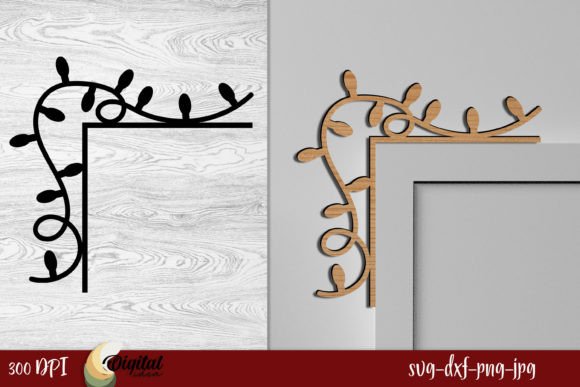
3D Christmas Door Corners Laser Cut SVG
As someone who has spent years reviewing machine embroidery design files for both personal crafting and commercial client work, I know that the difference between a good holiday project and a great one often comes down to the specific details of the design itself. When I first laid eyes on the 3D Christmas Door Corners Laser Cut SVG, my immediate reaction wasn't just about the festive theme, but about how this specific layout would translate from a digital file into a tangible, stitched reality. It creates an instant mood of warmth and welcome, suggesting a design that belongs not just on a random t-shirt, but in spaces where people gather, like a boutique shop entrance or a cozy home during the holidays.
The concept of a "door corner" is clever because it frames the viewer's attention. Instead of a generic tree or snowflake, this design mimics the physical architecture of a holiday greeting. For an embroidery designer, this presents a unique opportunity to play with depth and texture. The "3D" aspect mentioned in the title promises a dimensional look that elevates the piece beyond standard flat stitching. However, as a reviewer, I have to look past the marketing terms and ask: does this hold up under the needle? Would it survive the wash cycle on a frequently used item?
Real-World Application: From Screen to Stitch
To truly understand the value of the 3D Christmas Door Corners Laser Cut SVG, let's imagine a real scenario. Suppose you are a small business owner preparing a limited run of custom embroidered tote bags for a local holiday market. You want your products to stand out on the shelf among hundreds of generic ornaments. You decide to use this design on the corners of a canvas tote bag intended for gifting.
In this context, the design shines. The corner placement allows the embroidery to wrap slightly around the edge of the fabric, creating a dynamic visual effect that draws the eye immediately. Unlike a central chest logo which can feel corporate, a corner accent feels artisanal and bespoke. If you stitch this onto a high-quality canvas or a soft cotton twill, the contrast between the crisp lines of the "laser cut" aesthetic and the textured fabric creates a sophisticated look. Customers browsing Etsy or craft fairs are increasingly looking for items that feel handcrafted and thoughtful. This design supports that narrative perfectly.
I also see potential for this design on baby items. Imagine a onesie or a soft muslin blanket where the design sits gently in the corner, framing a personalized name. The 3D element adds a touch of luxury without being overwhelming. Similarly, for aprons or kitchen towels, the design acts as a decorative border that doesn't interfere with the functional space of the garment. It transforms a simple utility item into a gift-worthy piece of decor.
Navigating Technical Challenges
However, every experienced embroiderer knows that a beautiful concept requires technical precision. The 3D Christmas Door Corners Laser Cut SVG introduces specific challenges that must be managed carefully. The term "Laser Cut" implies sharp, clean edges and potentially intricate negative space. In embroidery, achieving laser-like precision depends heavily on thread tension, stabilizer choice, and the density of the stitches.
If you attempt to stitch this on a stretchy fabric like a jersey sweatshirt without proper stabilization, the design will pucker, destroying the illusion of a crisp corner. The density of the fill stitches required to create the 3D effect must be balanced against the weight of the fabric. On thin materials, too much density can cause the fabric to tear or the threads to sink into the weave, making the design look muddy rather than dimensional. Conversely, on thick fabrics like denim or heavy wool, the design might get lost if the stitch count isn't sufficient to punch through the material.
Another critical consideration is the hoop size. Designs with significant diagonal or corner elements often require larger hoops to accommodate the full geometry without cutting off parts of the image. If your machine has a limited working area, you may need to reposition the hoop mid-stitch, which increases the risk of misalignment. Before committing to a production run, I strongly advise testing the design on scrap fabric first. Check the thread color contrast; a dark red thread on a black background might lose definition, whereas white thread on a navy towel could pop beautifully.
Strategic Use Cases and Limitations
This design is versatile, but it is not a universal solution. It excels in applications where the design is a focal point or a decorative accent. For embroidery projects involving hats or caps, the curved surface can distort the straight lines of a door frame. While possible, it requires advanced digitizing skills to compensate for the curvature, and the result may not meet professional standards unless done by an expert. Therefore, for beginners or those using automated machines, sticking to flat surfaces like tote bags, pillow covers, and tea towels is the safest bet.
There are also limitations regarding durability. Because the design features detailed corners and potentially dense stitch areas, it may not be suitable for items that undergo frequent, harsh washing, such as daily-use work uniforms or children's clothes that are thrown in the washer constantly. For these items, a simpler, more robust design with fewer fine details would ensure longevity. However, for seasonal decor, holiday gifts, or boutique branding where the item is treated with care, the 3D Christmas Door Corners Laser Cut SVG offers exceptional visual appeal.
When considering the commercial embroidery aspect, think about brand consistency. Using this design across a line of products—say, matching tote bags, aprons, and patches—creates a cohesive collection that signals professionalism to buyers. It tells the customer that you have put thought into the details. For an Etsy seller or a small shop product line, this kind of thematic consistency builds trust and recognition.
Designer Notes for Success
To get the most out of this embroidery file, here are some practical steps I recommend before starting your project. First, review the stitch density. High-density designs require excellent quality thread to prevent breakage and maintain the 3D effect. Low-quality thread can snag and ruin the intricate corners.
Second, pay close attention to the stabilizer. For a design with sharp angles and 3D elements, a cut-away stabilizer is often superior to tear-away because it provides permanent support, preventing the fabric from distorting over time. This is crucial for maintaining the shape of the door corners after multiple washes.
Third, always test the design in black and white mockups before printing or stitching. This helps you visualize the balance of light and dark areas and ensures that the details remain visible regardless of the final thread colors. If the design looks cluttered in grayscale, it will likely look cluttered in color.
Finally, confirm the licensing terms. Whether you are planning to sell finished goods or offer digital design assets, understanding the commercial rights is essential. Some files allow for unlimited sales, while others restrict the number of units or prohibit resale entirely. Always check the documentation provided with the Winter Amp collection or the specific vendor to avoid legal issues.
In conclusion, the 3D Christmas Door Corners Laser Cut SVG is a compelling asset for designers who want to add a touch of architectural charm to their holiday collections. It bridges the gap between digital artistry and tactile craftsmanship, offering a unique way to celebrate the season. By approaching it with careful planning, appropriate materials, and realistic expectations, you can turn this digital file into a stunning finished product that delights customers and elevates your brand.